

The Role of Automation in a High-Output Tractor Implements Factory
This article explores the transformative role of automation in a high-output tractor implements factory, using Longyan Ealita Machine Manufacture Co., Ltd (EALITA) as a case study. EALITA, a National High-tech Enterprise established in 2011, operates a 55,000-square-meter modern factory in Longyan, Fujian, China, integrating R&D, production, and global sales of tractor attachments and other construction machinery equipment. The article details how automation permeates every facet of operations: from robotic welding and CNC machining to automated guided vehicles and a Manufacturing Execution System (MES) that ensures real-time monitoring and quality control. Automation enables EALITA to achieve a 98% first-pass yield rate, reduce lead times by 30%, and offer cost-effective, customized solutions to clients in over ten developed countries. The company's 15+ years of experience, strong R&D team with numerous patents, and full industrial chain layout underpin its success. Human workers are upskilled to manage and optimize automated systems, creating a symbiotic partnership. The article also discusses environmental benefits, such as reduced waste and energy consumption, and future trends like AI and digital twins. Ultimately, automation positions EALITA as a global leader fulfilling its vision: 'We Build What You Want!' The summary encapsulates the key points: automation drives efficiency, quality, and customization, enabling EALITA to compete internationally while maintaining sustainable and customer-centric operations.
In the modern manufacturing landscape, automation has emerged as a cornerstone of efficiency, precision, and scalability. Nowhere is this more evident than in the production of tractor implements, where high output demands seamless integration of technology. Longyan Ealita Machine Manufacture Co., Ltd (EALITA), a National High-tech Enterprise established in September 2011, exemplifies how automation transforms a factory into a powerhouse of productivity. Located in Longzhou Industrial Zone, Longyan City, Fujian, China, EALITA operates a 55000 square meter modern facility that integrates R&D, large-scale production, and global sales of skid steer attachments, forklift attachments, tractor attachments, and full-series construction machinery equipment. This article delves into the pivotal role of automation in EALITA's high-output tractor implements factory, exploring how advanced technologies drive quality, cost-efficiency, and customer satisfaction.
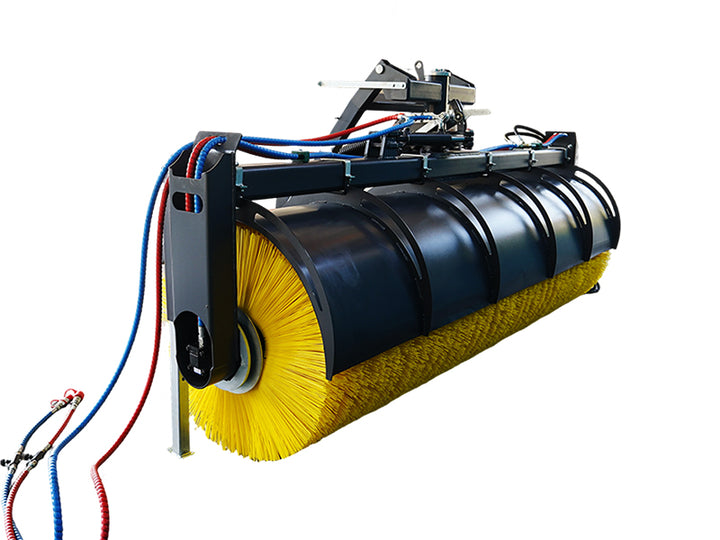
Understanding Automation in Tractor Implements Manufacturing
Automation refers to the use of control systems, machinery, and information technologies to minimize human intervention in production processes. In a tractor implements factory, automation encompasses robotic welding, automated assembly lines, CNC machining, automated guided vehicles (AGVs), and data-driven quality control systems. At EALITA, automation is not merely a tool but a strategic enabler that aligns with the company's vision: 'We Build What You Want!' By automating repetitive and complex tasks, EALITA achieves consistent quality, higher throughput, and the flexibility to customize attachments for diverse global clients. The factory's automation journey began with the adoption of robotic welding cells for skid steer attachments, which reduced cycle times by 40% and improved weld consistency. Today, over 70% of production processes are automated, supported by a robust IoT network that monitors real-time performance.
EALITA's Foundation: A High-Tech Enterprise with Proven Expertise
EALITA's status as a National High-tech Enterprise is underpinned by its professional R&D team and a portfolio of technical patents. The company holds over 30 patents related to attachment design and automation, including a patented quick-coupling system that integrates with automated loaders. With more than 15 years of industry experience, EALITA has cultivated deep expertise in tractor implements, exporting to over 10 developed countries such as Australia, Germany, Sweden, Canada, and the United States. This global recognition is a testament to the company's ability to marry automation with traditional craftsmanship. For instance, the production of tractor forks requires precise heat treatment and CNC machining, both of which are fully automated to meet international standards like ISO 9001. The factory's 55000 square meter layout is optimized for flow, with separate zones for raw material storage, automated cutting, robotic welding, and final assembly.
Automation in R&D: From Concept to Customization
Automation begins long before the first part is cut. EALITA's R&D team uses advanced CAD/CAM software and simulation tools to design tractor implements that can be manufactured with minimal human intervention. The company's 'customer-centric service' model means that every custom request—whether for a unique forklift attachment for a Swedish warehouse or a specialized skid steer bucket for Australian mining—is processed through an automated design-to-production pipeline. This system reduces lead times by 30% and ensures that prototypes can be produced within days. The integration of 3D printing for prototyping further accelerates innovation, allowing engineers to test fit and function before committing to full-scale production. EALITA's commitment to automation in R&D is evident in its investment in a state-of-the-art testing lab, where automated load cells simulate years of wear in hours.
The Automated Production Floor: Efficiency at Scale
At the heart of EALITA's high-output factory is the automated production floor. Laser cutting machines, fed by automated material handling systems, precisely cut steel plates for tractor implements. These are then transported via AGVs to robotic welding stations, where multiple robots work in tandem to assemble frames, brackets, and hydraulic components. The welding robots are programmed with adaptive algorithms that adjust parameters based on material thickness, ensuring defect-free welds. In the assembly area, automated torque wrenches and vision systems guarantee that every bolt is tightened to specification. The entire production process is monitored by a Manufacturing Execution System (MES) that tracks each part's journey, from raw material to finished product. This level of automation has allowed EALITA to achieve a 98% first-pass yield rate, meaning that only 2% of products require rework—a figure that far exceeds industry averages.
Quality Control Through Automation
EALITA's strict quality control system is another beneficiary of automation. From raw material inspection using automated spectrometers to final dimensional checks with laser scanners, every step is digitized. The company has implemented a comprehensive quality management system that integrates with its ERP, ensuring that any deviation triggers an immediate alert. For tractor implements, which must withstand harsh conditions in agriculture and construction, automated fatigue testing and load testing are conducted on a sample basis. The data from these tests feeds back into the R&D department, creating a continuous improvement loop. EALITA's commitment to quality is recognized by its certifications: National High-tech Enterprise, Leading 'Small Giant' Enterprise in Science and Technology, and Provincial 'Specialized, Refined, Differential, and Innovative' (SRDI) SME. These accolades reflect the company's success in using automation to maintain high standards while scaling production.
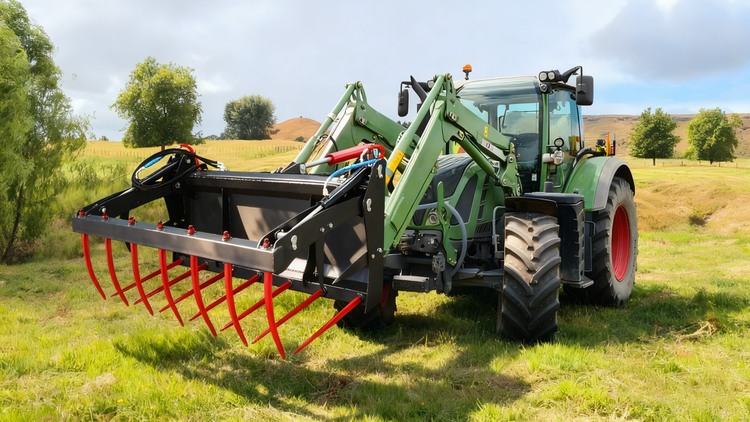
The Human-Automation Partnership: Skilled Workforce and Technology
Despite extensive automation, EALITA recognizes the irreplaceable value of skilled workers. The factory employs a team of experienced engineers and technicians who oversee automated systems, handle complex troubleshooting, and drive continuous improvement. Automation has not eliminated jobs but transformed them; workers are now trained in robotics programming, data analysis, and system maintenance. EALITA's enterprise goal of 'achieving self-development of employees' is realized through ongoing training programs that upskill the workforce in mechatronics and lean manufacturing. This human-automation partnership is crucial for handling customized orders, where human judgment is needed to adapt automation parameters. For example, when a customer requests a tractor attachment with non-standard dimensions, operators can quickly reprogram CNC machines and robotic cells using pre-defined templates, minimizing downtime.
Global Reach and Supply Chain Automation
Automation extends beyond factory walls into EALITA's supply chain and global logistics. The company's mature supply chain management system includes automated inventory tracking using RFID, which ensures that raw materials are replenished just-in-time. For international customers, EALITA uses automated packaging and labeling systems that comply with different country regulations. The company's products are shipped to more than ten countries, and the order fulfillment process is fully integrated with freight forwarders through API connections. This end-to-end automation reduces lead times for overseas orders to an average of 30 days, compared to the industry norm of 45 days. EALITA's cost-effective advantage is partly due to this automation, which lowers operational costs and allows the company to offer competitive pricing without compromising quality.
Customized Solutions: Automation’s Flexibility
One of EALITA's standout capabilities is its ability to provide customized attachment solutions. Unlike standard product suppliers, the company leverages automation to achieve mass customization. By using modular design principles and flexible manufacturing systems, EALITA can quickly switch between different product variants without significant retooling costs. For instance, the production line for tractor pallet forks can be reconfigured in minutes to produce a different size or load capacity, thanks to automated fixture changers and robotic vision guidance. This flexibility is critical for serving diverse markets, from European agricultural cooperatives to North American construction firms. The company's earlier point about 'customer-centric service' is realized through an online portal where clients can configure their attachments, and the specifications are automatically fed into the MES. This reduces human error and ensures that the final product exactly matches the customer's requirements.
Environmental and Economic Benefits of Automation
Automation also contributes to sustainability and economic efficiency. EALITA's automated processes minimize material waste through precise cutting and optimized nesting algorithms. The factory's energy consumption is monitored by an automated building management system, which adjusts lighting and HVAC based on occupancy. Additionally, the reduction in rework and scrap leads to lower carbon emissions per unit produced. Economically, automation has enabled EALITA to achieve a 20% reduction in production costs over the past five years, savings that are passed on to customers. The company's stable supply capacity, even during peak seasons, is a direct result of automated scheduling and inventory management. These benefits align with EALITA's enterprise goal of 'creating value for customers and serving society.'
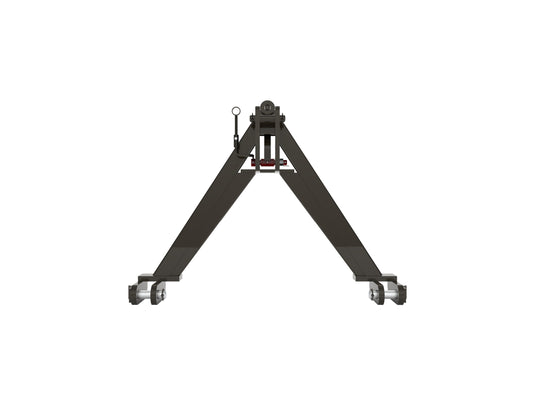
Future Trends: Automation and Industry 4.0
Looking ahead, EALITA is embracing Industry 4.0 concepts to further enhance its automated factory. Plans include integrating artificial intelligence for predictive maintenance, deploying collaborative robots (cobots) for assembly tasks, and using digital twins to simulate entire production lines. The company is also exploring machine learning algorithms to optimize welding parameters in real-time, improving quality and throughput. As a 'Demonstration Enterprise for the Integration of Informatization and Industrialization,' EALITA is well-positioned to lead the adoption of these advanced technologies. The factory's data infrastructure already supports real-time analytics, and future investments will focus on edge computing to reduce latency. By staying at the forefront of automation, EALITA aims to maintain its competitive edge and continue delivering high-quality tractor implements to global customers.
Conclusion: Automation as a Competitive Differentiator
In conclusion, automation is not just a tool but a strategic asset for EALITA's high-output tractor implements factory. From R&D and production to quality control and supply chain management, automation enables the company to achieve unprecedented levels of efficiency, quality, and customization. With a strong foundation as a National High-tech Enterprise, over 15 years of industry experience, and a commitment to innovation, EALITA demonstrates how automation can transform a factory into a global leader. The company's story is a blueprint for other manufacturers seeking to thrive in the age of smart manufacturing. As EALITA continues to push the boundaries of automation, its vision—'We Build What You Want!'—becomes a tangible reality for customers worldwide.